Broker Check
Our July 2026 Newsletter: Health Savings Account (HSA) Reimbursement Guide

Our July 2026 Newsletter: Health Savings Account (HSA) Reimbursement Guide

July 02, 2026

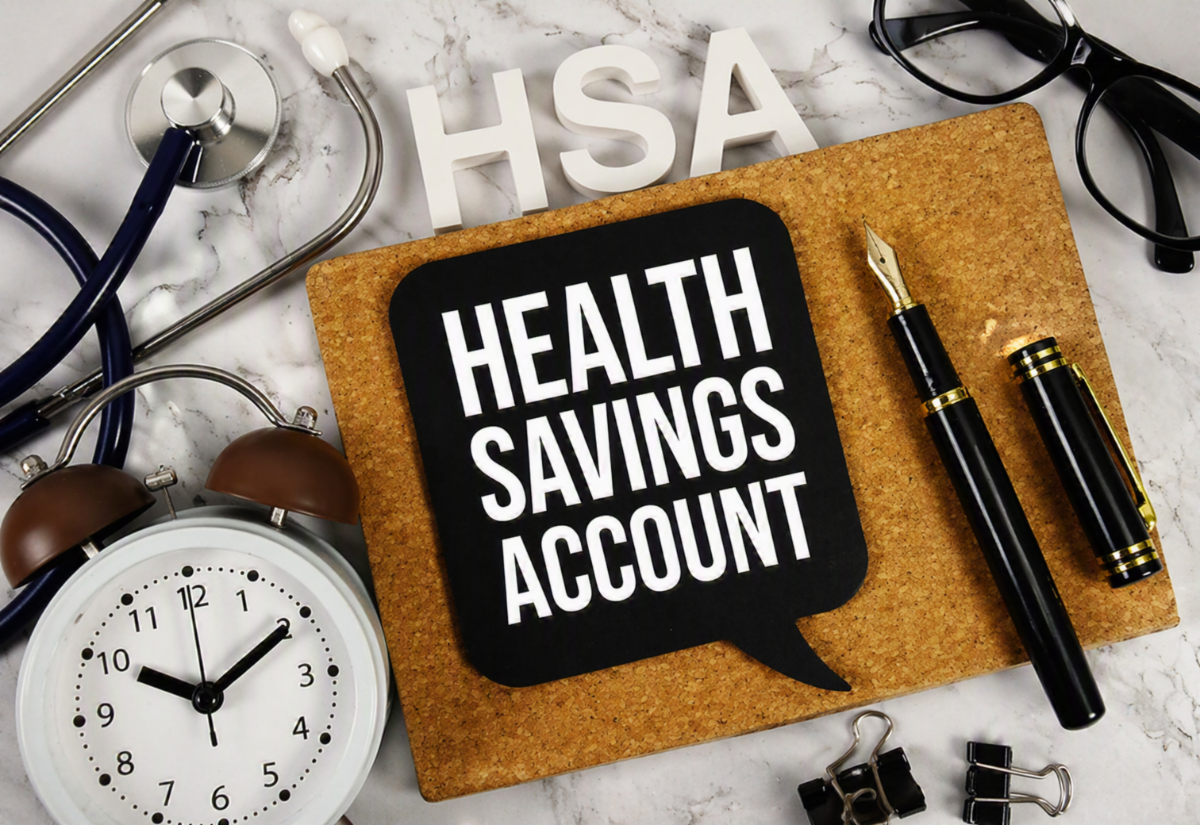
Health Savings Account (HSA) Reimbursement Guide1

A health savings account (HSA) offers a convenient way to cover qualified medical expenses. Provided you're enrolled in an HSA-eligible health plan, you can make contributions to the account and then use your HSA debit card to directly pay for such expenses as you incur them, or you can reimburse yourself if you pay out of pocket, days or even decades later.

In order to request an HSA reimbursement, make sure the medical expenses are qualified and that your HSA account was already opened when you incurred the medical expenses, you were not reimbursed for the expense in any other way, and that you did not take the expense as an itemized deduction on taxes in any year.

Click here to read the full HSA Reimbursement Guide and check out this helpful graphic “What You Can (and Can’t) Pay for with Your HSA" that includes a list of possible HSA Reimbursable qualified medical expenses. If you have questions about using your HSA, please don’t hesitate to contact us at (518) 584-2555.

Beginning Again in Retirement

Retirement is often imagined as a long-awaited reward - a time to finally lean into comfort, mastery, and ease after decades of building expertise. Yet for many, it introduces an unexpected shift: the return to being a beginner. Whether it’s beginning a new hobby and stepping into a pottery studio, fumbling through a new language, learning the rules of pickleball, or learning to spend rather than save, retirement can place you back at square one, confronting the unfamiliar feeling of not knowing.

This transition can be unsettling, especially for those who have spent years defined by competence and confidence. But as retirement coach Joe Casey suggests, rethinking these new pursuits as experiments rather than tests can ease that pressure. Research reinforces this mindset, showing that embracing new and challenging skills not only builds resilience but also supports cognitive health. In retirement, starting over isn’t a setback - it’s an opportunity to grow in entirely new ways.

Click here to read the full article “Why Retirement Demands a Beginner’s Mindset.” If you’d like to chat about transitioning from the save to spend mindset, don’t hesitate to call our office at (518) 584-2555.

Did You Know: 403(b) Retirement Plans2

A 403(b) is a tax-advantaged retirement plan similar to a 401(k) plan, but designed for employees of school systems, nonprofit hospitals, religious organizations and other tax-exempt employers, known as 501(c)(3) organizations.

Eligible Organizations:

  • Public education organizations, including primary and secondary schools, state colleges and universities, and junior colleges.
  • Nonprofit organizations, including hospitals, religious organizations, charitable institutions and social welfare agencies.

Participant contributions are 100% immediately vested; if employer contributions are offered, they may be subjected to a vesting schedule.

Each employee participating in the plan determines how much money is to be automatically contributed from each paycheck. Generally, participants can invest an annual maximum of $24,500 in 2026 or $32,500 for those age 50 to 59 and 64+, or $35,750 for those age 60 to 63. (The higher catch-up limit is effective January 1, 2026, and is only applicable to participants who attain ages 60, 61, 62, or 63 in 2026.)

Should you leave the job offering the 403(b), there are options when your employment ends:

  • Roll over to an IRA: Rolling 403(b) assets to an IRA can allow participants to keep the same tax benefits, avoid penalties, and choose from a wide range of investment options.
  • Stay in the old plan: Participants may be able to remain in the plan and keep the same benefits.
  • Move to a new plan: If the participant’s new employer accepts rollovers, participants can keep the tax benefits while consolidating their retirement plan money.
  • Cash out:  Participants will owe applicable taxes and, if not yet age 59½ (unless an exception applies), an additional 10% early distribution tax. You will also be losing the tax benefits that come with a retirement plan account.

To dive deeper into 403(b)s, click here. If you’re interested in us doing an analysis of your current employee plan to see if it aligns with your retirement goals, please call us: (518) 584-2555.

Reminder: SFS Email Address Update

Please note that our email addresses were updated last May. We've had some name changes, and most importantly the domain changed from

@lpl.com to @lplfinancial.com.

Please update your records to reflect these changes. Thank you!

Robert.Schermerhorn@lplfinancial.com

Tim.Katusha@lplfinancial.com

Jamie.Isabella@lplfinancial.com

Drew.Chapman@lplfinancial.com

Kate.Fryer@lplfinancial.com

It's a SPACtacular Summer in Saratoga Springs!

This year not only celebrates the USA’s 250th Anniversary, but it’s Saratoga Performing Arts Center’s 60th Anniversary as well! They’re a staple of our community, and Saratoga wouldn’t be the same without them. Did you know that the New York City Ballet Performed at SPAC’s opening ceremony in 1966? They still return every year for their Summer Residency. Why not take in one of their performances this month?

Here are a few other events you may want to add to your July calendar:

For the complete events calendar, click here

1: fidelity.com    2: capitalgroup.com